Introduction
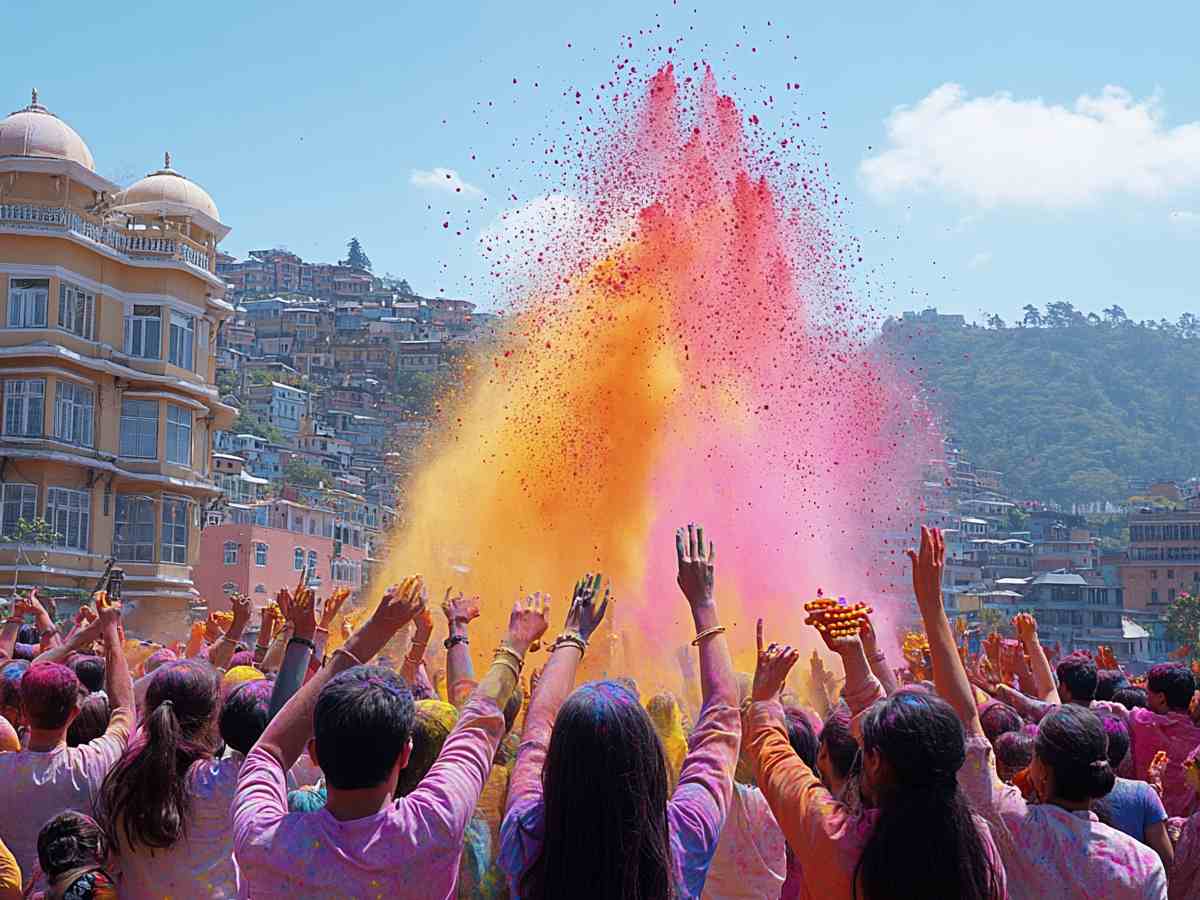
Holi, the festival of colors, is one of the most widely celebrated festivals in India. While it is observed with enthusiasm across the country, the Holi festival in the Kumaon region of Uttarakhand has a unique cultural and musical essence. Unlike the typical one- or two-day Holi celebrations in other parts of India, Kumaoni Holi is an extended festival that lasts for weeks, blending music, spirituality, and community bonding.
Types of Holi Celebrations in Kumaon
Kumaon celebrates Holi in three distinct forms:
1. Baithaki Holi (Singing Holi in Gatherings)
Baithaki Holi, also known as Nirvan Holi, is a unique musical tradition of Kumaon. It involves classical and semi-classical musical gatherings where Holi-themed songs are sung in Raagas like Kafi, Bhairav, and Pilu. These gatherings begin weeks before the actual festival and are held at temples, community halls, and homes. The songs, deeply spiritual and devotional, praise Lord Krishna and Radha while capturing the essence of spring and festivity.
2. Khadi Holi (Standing Holi with Folk Dance and Music)
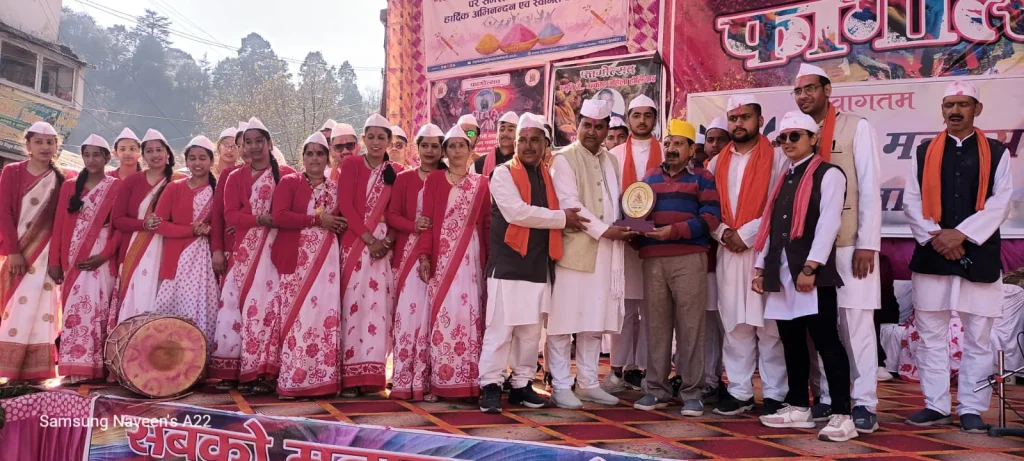
Khadi Holi is an energetic form of celebration where men, dressed in traditional white attire with turbans, gather in groups and move through villages, singing and dancing. Unlike the Baithaki Holi, which is more melodic, Khadi Holi has a rhythmic and playful energy, with participants teasing each other and throwing colors. The entire region resonates with laughter, drum beats, and folk tunes, creating an electrifying atmosphere.
3. Mahila Holi (Women’s Holi Celebrations)
Women in Kumaon have their own exclusive Holi celebrations called Mahila Holi, where they sing Holi songs in a more intimate and traditional setting. These gatherings allow women to express their joy through music, dance, and colors while maintaining their cultural heritage.
Traditional Rituals and Customs
- Holi Ka Dahan (Bonfire Ceremony): Like other parts of India, Holika Dahan is observed in Kumaon, where people light bonfires on the eve of Holi to symbolize the victory of good over evil.
- Chharadi Holi (Festival of Colors): The final day of Holi, known as Chharadi Holi, is when people smear each other with vibrant colors, symbolizing joy and unity.
- Abeer and Gulal: Instead of synthetic colors, organic gulal and abeer made from flowers and natural ingredients are traditionally used.
Cultural and Historical Significance
- The Baithaki Holi tradition is believed to have been introduced by the Chand Dynasty, which ruled Kumaon in the medieval period.
- The unique musical form of Holi is influenced by Indian classical music, setting it apart from the boisterous Holi celebrations in other regions.
- The festival strengthens community bonds, as it is celebrated across villages, towns, and cities with equal enthusiasm.
Conclusion
The Holi festival in Kumaon is not just a celebration of colors but a blend of tradition, music, and spirituality. It reflects the region’s rich cultural heritage and deep-rooted community values. If you want to experience Holi in a unique and soulful way, witnessing the musical and festive spirit of Kumaoni Holi is a must!